Buying a Car in Oklahoma? 7 Costly Mistakes (and How Insurance Fits In)
Buying a Car in Oklahoma? 7 Costly Mistakes (and How Insurance Fits In)
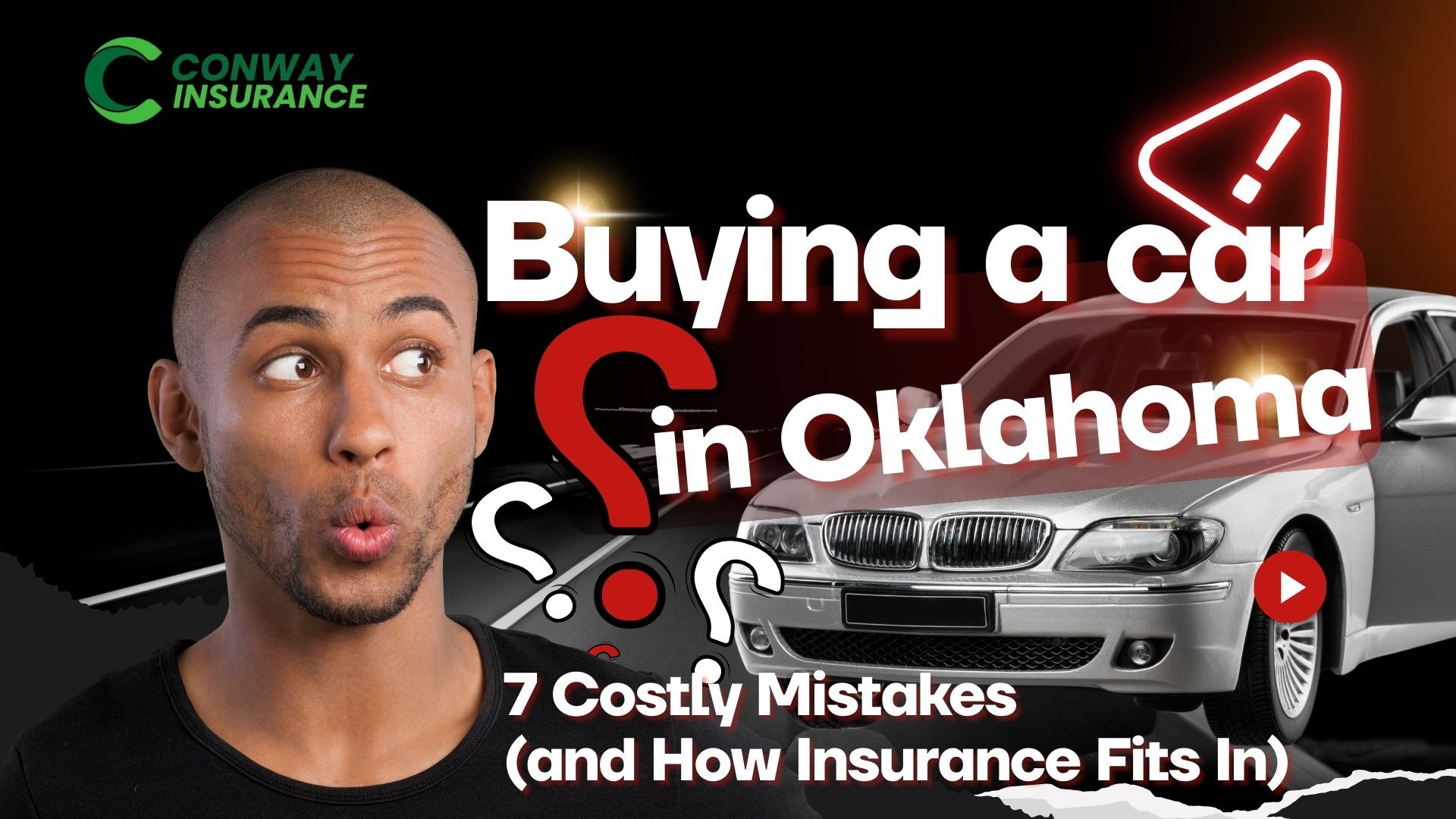
You’ve driven up to a car dealership in Edmond, Norman, Tulsa, or one of the hundreds across Oklahoma for a test drive — fallen in love with the leather seats, the new-car smell, and the salesperson’s “today-only deal.” You’ve convinced yourself the monthly payment isn’t that bad.
You know the look — that “today-only deal” grin.
Then come the tag fees… and that insurance quote you didn’t see coming.
Buying a car isn’t just about the test drive and financing; it’s about understanding the hidden costs that follow you home — like insurance.
🧾 TL;DR – Quick Guide
🚘 Buying a car in Oklahoma? Avoid these seven mistakes:
❌ Don’t skip VIN checks
❌ Don’t rely on minimum coverage
💬 Quote your insurance before signing
🛡️ Protect yourself with GAP and comprehensive coverage
📋 Review your policy afterward
🤝 Keep your agent in the loop — small details prevent big problems
🧭 Oklahoma Quick Facts
• 13% of Oklahoma drivers are uninsured
• State minimum liability: 25/50/25 — meaning $25,000 per person, $50,000 per accident for bodily injury, and $25,000 for property damage
• Average new vehicle cost: $48,000
• Average Oklahoma tag & title fees: $300–$600 per vehicle
💡 Translation: A single crash involving a newer SUV could exceed the state’s minimum property-damage limit instantly.
1️⃣ Forgetting to Include Insurance in the Budget
Before you visit the dealership, get pre-approved for financing and include insurance estimates.
A $500 car payment may sound great — until you add another $150–$250 for insurance.
Don’t forget to budget for Oklahoma’s vehicle taxes, title, and tag fees, which can add several hundred dollars to your total cost.
Knowing your all-in cost keeps your finances (and expectations) realistic.
💡
Insurance Insight:
In Oklahoma, compact SUVs and midsize sedans usually cost 10–20% less to insure than sporty or luxury models.
Why? Repair costs, theft rates, and claim histories.
Always ask your agent for a “what-if” quote before signing — even small model differences can mean big premium changes.
Rates and coverages vary by driver and carrier.
2️⃣ Relying on Minimum Coverage
💡 Real-World Reminder:
Oklahoma law requires at least 25/50/25 liability to drive or register a vehicle.
But with the average new car at $48,000, one crash with a luxury SUV could exceed those limits instantly.
📋
Coverage Tip:
Coverage usually begins once payment, signed paperwork, and carrier confirmation are complete.
Talk to your agent about increasing your liability limits — in many cases, it’s just a few dollars more per month for real protection.
3️⃣ Misunderstanding “Full Coverage”
➡ The term “full coverage” doesn’t technically exist in the insurance industry.
When a lender or dealership says it, they usually mean a policy that includes comprehensive and collision along with liability — but deductibles and exclusions still apply.
Liability keeps you legal — but comprehensive and collision protect your vehicle from Oklahoma’s most common risks like hail, deer, hit-and-runs, and storm damage.
From that hailstorm in
Piedmont to a deer crossing Route 66 in
El Reno, a hit-and-run on
Hefner Parkway, or flying patio furniture in
Jenks — these coverages often pay for themselves.
4️⃣ Skipping GAP Coverage
💸 GAP (Guaranteed Asset Protection) bridges the difference between what your insurance pays and what you still owe on your loan.
If your car is totaled or stolen, this coverage can prevent you from paying off a vehicle you no longer have.
Check with your dealership, finance company, or insurance carrier to see if GAP is available.
In some cases, you can buy it separately from a licensed third-party provider — just make sure they’re financially stable and reputable.
Because GAP terms and eligibility differ between lenders and carriers, speak directly with your insurance representative or finance provider to confirm what’s included and how it applies to your situation.
5️⃣ Overlooking Used-Car History & Salvage Titles
⚠️ Salvage Title Reality:
Cars with rebuilt or salvage titles can often be insured for liability, but comprehensive and collision may or may not be available depending on carrier underwriting guidelines.
Ask your agent or carrier before you buy — coverage isn’t guaranteed for previously totaled vehicles, and claim values may be limited.
Also, ask your agent how claims would be handled for used or rebuilt cars. Knowing this up front prevents surprise claim denials later.
6️⃣ Not Verifying Details After Purchase
Once you’ve bought and insured your car, double-check your documents.
Verify that the year, make, model, VIN, lienholder, driver list, and address on your insurance paperwork match your actual records.
A single typo (“S” vs. “5”) can delay claims or billing later.
📝 Ownership Reminder:
When you sell or trade in your vehicle, notify both your insurance agent and your local Oklahoma tag agency (or the Motor Vehicle Division).
Filing this document proves you no longer own the car — and saves time later if:
1️⃣ The new owner runs toll booths
2️⃣ Parking tickets arrive in your name
3️⃣ The vehicle is involved in an accident
Without that release, state records may still list you as the owner — leading to fines and headaches that take hours to fix.
7️⃣ Relying on the Dealer to Handle Everything
Some dealerships offer to “take care of your insurance” before you drive off the lot.
That’s convenient — but coverage isn’t active until you, the insured, authorize the change with your agent or carrier and receive confirmation.
Tiny reality check: your salesperson (or your neighbor’s cousin’s barber) can’t add a car to your policy for you.
Only you can approve changes, and your agent or carrier must confirm them.
💭 Common Myths About Car Insurance
Myth 1: “The dealership handles my insurance.”
➡ Nope. Coverage isn’t active until you authorize the change through your agent or carrier.
Myth 2: “Full coverage covers everything.”
➡ “Full coverage” is shorthand for a policy that includes comprehensive and collision — not a magic shield. Deductibles and exclusions still apply.
Myth 3: “GAP insurance replaces your car.”
➡ It covers the loan-to-value difference — not the cost of a new car. Discuss details with your lender or insurance rep.
✅ Before You Leave the Dealership Checklist
✅ Verify VIN, make, model, and lienholder on your paperwork and insurance card
✅ Confirm coverage limits meet lender requirements
✅ Keep temporary proof of insurance in your glovebox or phone
✅ Ask whether GAP is available through your dealership, finance company, or insurer — verify any third-party provider is licensed and reputable
✅ Remove sold or traded vehicles from your policy and state registration
💬 FAQ: Oklahoma Car Buying & Insurance
Q: Can I drive off the lot without proof of insurance?
A: No. Oklahoma law requires active liability coverage before registration or driving — even for test drives at some dealerships.
Q: What’s the best type of car to buy for cheaper insurance?
A: Cars with strong safety ratings, moderate repair costs, and lower theft rates — like midsize sedans and compact SUVs — generally cost less to insure.
Q: Can cars with rebuilt or salvage titles get full coverage?
A: Typically, carriers limit them to liability only. Ask your agent for options based on underwriting guidelines.
Q: Does credit affect car insurance rates?
A: Yes. Oklahoma insurers may use a credit-based insurance score when setting rates. Keeping your credit healthy can save you money before you even shop.
📊 Oklahoma Insurance Snapshot
Over 13% of Oklahoma drivers are uninsured — making Uninsured Motorist Coverage one of the smartest add-ons for any new car buyer.
🏁 Final Thoughts
Buying a car in Oklahoma should be exciting — not expensive later.
Check your coverage, understand your options, and keep
Conway Insurance in your corner.
When something unexpected happens, you’ll be glad your coverage was set up right the first time.
🏢 Conway Insurance Makes It Simple
📞 Call: 405-733-2886
📧
Email:
steven@conwayinsuranceok.com
🌐
Visit:
conwayinsuranceok.com
✅ Licensed in
Oklahoma | Texas | Arkansas
Coverage options and eligibility vary by carrier and underwriting guidelines.
This content is for general informational purposes only. Coverage is not active or bound until signed applications and payment are received and confirmed by the carrier.
Always review your policy documents or contact your licensed agent or carrier for details.
Recent posts